Introduction
Zinc deficiency symptoms are one of the most overlooked health concerns by both patients and healthcare providers. Zinc is an essential trace mineral that influences over 300 enzymatic reactions in the human body, including immune function, wound healing, DNA synthesis, and hormonal regulation.
Medical professionals emphasize that even mild zinc deficiency can disrupt vital body systems, causing fatigue, poor immunity, slow wound healing, hair loss, digestive issues, and more. According to the Healthline clinical guide on zinc benefits, zinc plays a critical role in immune cell activation and controlling inflammation.
Early identification of zinc deficiency symptoms allows individuals to implement dietary and lifestyle changes before serious health complications develop. Nutrition experts also recommend reading related guides such as Vitamin B12 Deficiency Symptoms and Treatment to understand how multiple micronutrients work together to support overall health.
Individuals aiming for better long-term wellness should recognize these early warning signs and act promptly to restore optimal zinc levels.
What Is Zinc Deficiency
Zinc deficiency occurs when the body does not obtain adequate zinc from diet, or when absorption is impaired due to digestive disorders. Because the body cannot store large amounts of zinc, regular intake is crucial to maintain optimal health.
According to research from the National Institutes of Health (NIH), zinc contributes to immune function, protein synthesis, wound healing, DNA formation, and reproductive health. Low zinc levels can compromise these processes, increasing susceptibility to infections, skin disorders, and slower recovery from injuries.
Dietary patterns low in zinc-rich foods or high in processed items can increase deficiency risk. Individuals with gut health issues such as inflammatory bowel disease may also face challenges absorbing zinc efficiently.
For further reading on nutrient absorption, check Magnesium Deficiency Symptoms and Stomach Health, which explains how minerals interact with gut health.
Why Zinc Is Essential for Human Health
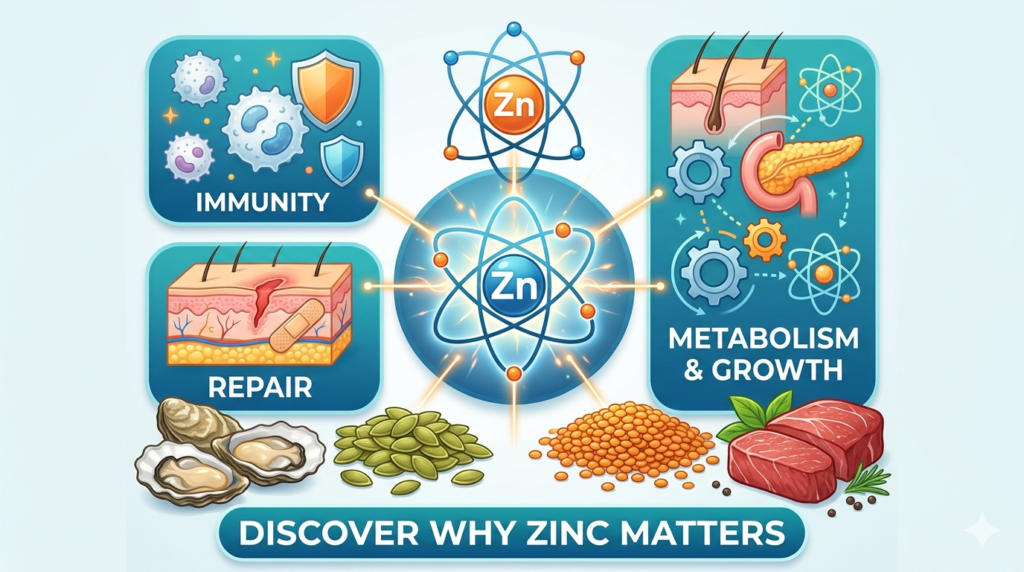
Zinc is vital for immune defense, metabolic function, tissue repair, and cellular growth. Doctors and nutritionists describe zinc as one of the most functionally important trace minerals in the human body.
Immune System Support: Zinc activates immune cells that fight off pathogens. Without sufficient zinc, the immune system’s efficiency declines.
Wound Healing and Skin Health: Zinc is critical for tissue regeneration and inflammatory response during healing. Studies in Cleveland Clinic – Zinc and Skin Health show that zinc helps accelerate wound repair.
Digestive Health: Zinc supports digestive enzyme function. Deficiency may lead to poor nutrient absorption and digestive discomfort.
Hormonal Regulation: Zinc influences growth hormone, testosterone, and insulin production. Low levels may disrupt hormone balance.
People looking to enhance immunity naturally can also benefit from How to Strengthen Immunity Naturally, which explains lifestyle habits and dietary choices that boost immune function.
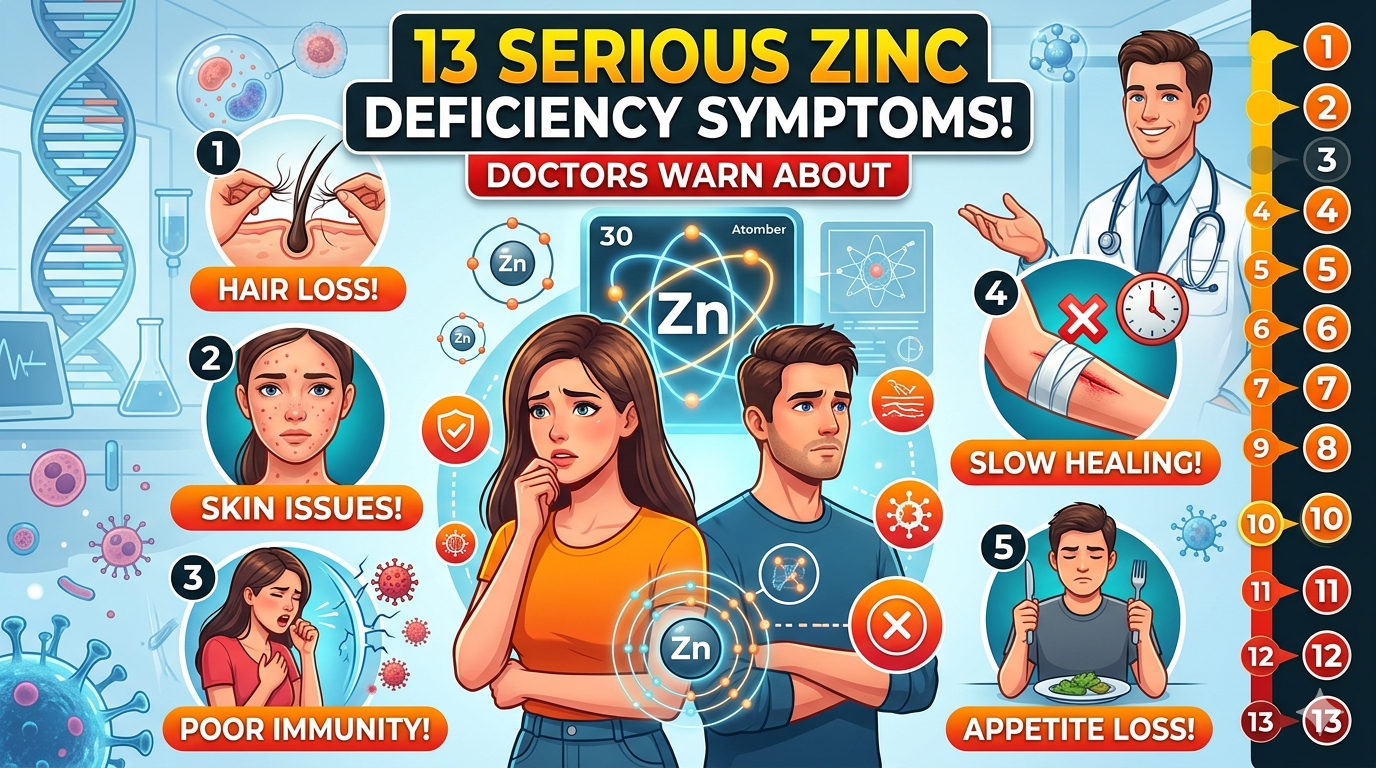
13 Zinc Deficiency Symptoms Doctors Warn About

1. Weak Immune System
Individuals with low zinc levels are more prone to infections, colds, and slow recovery. According to Medical News Today – Zinc Deficiency, zinc helps activate T-cells for pathogen defense.
2. Slow Wound Healing
Zinc supports tissue regeneration. Cuts and abrasions may take longer to heal during deficiency, as explained in Cleveland Clinic – Zinc and Skin Healing Research.
3. Hair Loss
Zinc is essential for protein synthesis and follicle health. Deficiency can lead to hair thinning and excessive shedding.
4. Skin Problems
Acne, dermatitis, eczema, and other inflammatory skin issues may arise due to low zinc. Zinc regulates inflammatory response, improving skin healing and reducing irritation.
5. Loss of Appetite
Zinc influences taste perception and appetite. Reduced hunger and altered taste sensation can indicate deficiency.
6. Digestive Problems
Digestive enzyme production decreases with low zinc, causing poor nutrient absorption and stomach discomfort. See also Magnesium Deficiency Symptoms and Stomach Health.
7. Fatigue and Weakness
Zinc participates in metabolic energy production. Low levels can cause persistent tiredness, low stamina, and weakness.
8. Brain Fog
Cognitive function is affected by zinc deficiency. Poor memory, lack of concentration, and mental fatigue are common symptoms.
9. Frequent Infections
Recurrent colds, flu, and respiratory infections indicate low zinc. Proper zinc levels enhance immune response efficiency.
10. White Spots on Nails
Mineral deficiencies like zinc can cause white spots or ridges on fingernails, indicating underlying health issues.
11. Reduced Sense of Taste and Smell
Zinc is crucial for sensory functions. Loss of taste or smell may suggest a deficiency.
12. Hormonal Imbalance
Low zinc can disrupt testosterone, insulin, and thyroid hormone regulation. Symptoms may include fatigue, mood swings, or low energy.
13. Poor Growth in Children
Children need zinc for proper growth. Deficiency may cause delayed development, stunted growth, and weaker immunity.
Zinc Deficiency and Immune System Health
Zinc strengthens both innate and adaptive immunity. It activates macrophages, neutrophils, and T-cells. Low zinc leads to slower immune response and higher infection risk.
Clinical insights from WebMD – Zinc and Immune Function highlight how zinc supplementation can shorten cold duration and improve recovery from infections.
Nutrition-based strategies for immune support can also be explored in Best Foods to Boost Immunity, focusing on diet and micronutrients for immune health.
Causes of Zinc Deficiency
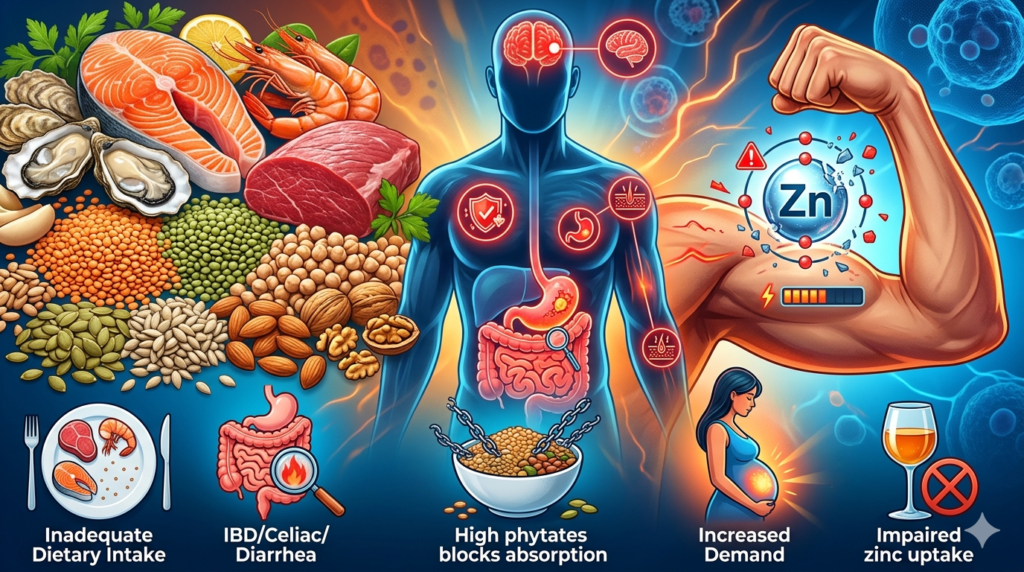
- Inadequate dietary intake (low in meat, seafood, legumes, nuts)
- Digestive disorders (IBD, celiac disease, chronic diarrhea)
- High phytate diets (plant compounds in grains/legumes block absorption)
- Pregnancy and lactation (increased zinc demand)
- Alcohol consumption (impairs absorption)
Best Zinc-Rich Foods
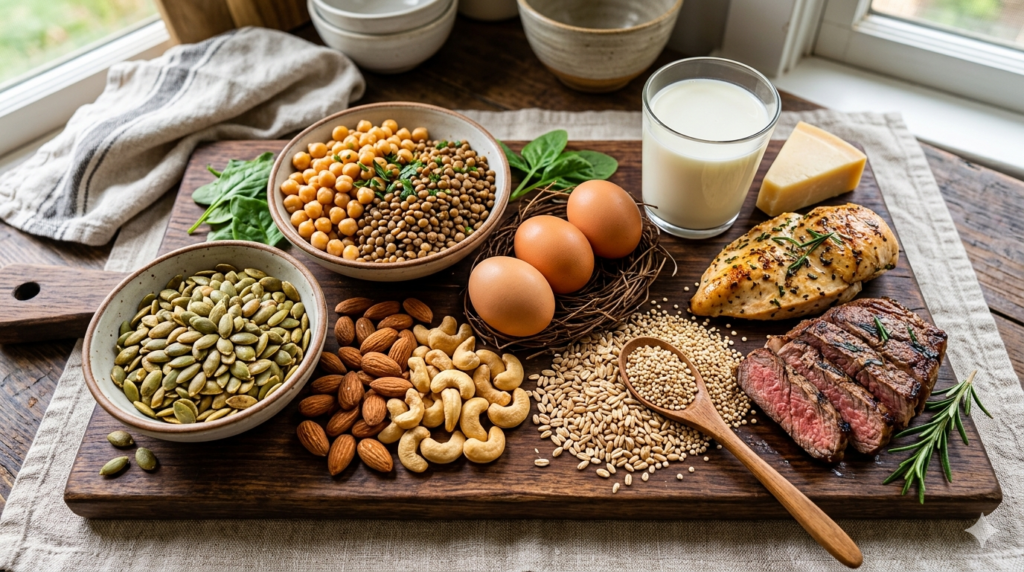
- Pumpkin seeds
- Chickpeas and lentils
- Nuts (almonds, cashews)
- Eggs
- Whole grains
- Dairy products
- Red meat and poultry (if diet includes)
Including these foods improves immunity, supports metabolism, and prevents deficiency. For extra immune support, check Immunity Boosting Drinks at Home.
Natural Ways to Improve Zinc Levels

- Eat zinc-rich foods daily
- Avoid high-phytate meals that block absorption
- Support gut health for better nutrient uptake
- Ensure adequate sleep and physical activity
- Limit processed foods and alcohol
When to See a Doctor
Consult a healthcare provider if symptoms persist. Blood tests can confirm zinc deficiency. Doctors may recommend:
Professional guidance ensures safe and effective recovery from deficiency.
FAQs
Q1: How much zinc do adults need daily?
A: Generally 8-11 mg/day depending on gender and age.
Q2: Can zinc deficiency cause hair loss?
A: Yes, zinc is vital for hair follicle health and protein synthesis.
Q3: Are vegetarians at risk of zinc deficiency?
A: Higher risk exists due to plant compounds that inhibit absorption; legumes and nuts help.
Q4: Can children have zinc deficiency?
A: Yes, deficiency can affect growth, immunity, and development.
Q5: How fast does supplementation work?
A: Mild deficiency may improve in weeks; severe cases require months under medical supervision.
Conclusion
Zinc deficiency symptoms affect immunity, metabolism, skin, digestion, and hormone balance. Maintaining optimal zinc intake through diet, supplements (if prescribed), and lifestyle adjustments is crucial for overall health.
Early detection of symptoms, combined with professional guidance and dietary improvements, can prevent serious complications and strengthen long-term wellness.