
📌Introduction
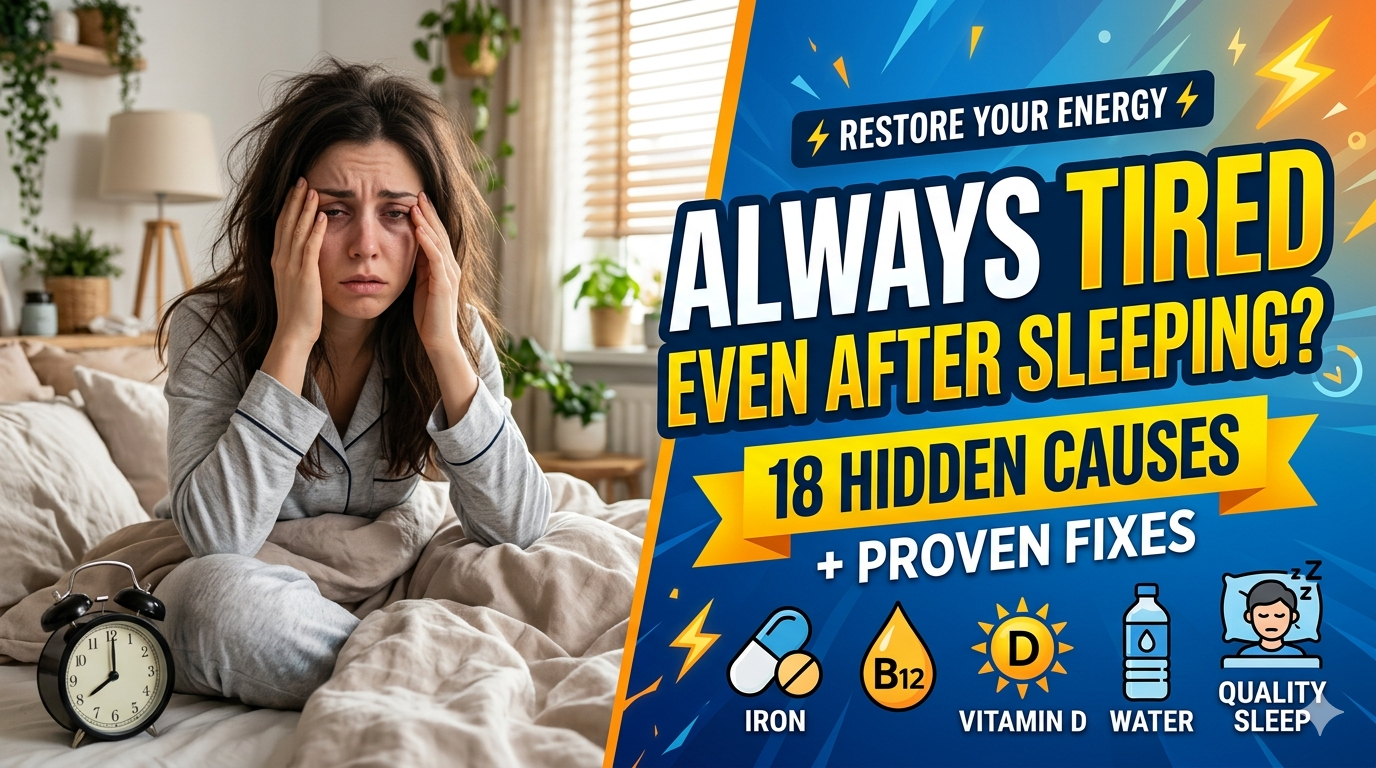
Do you wake up feeling exhausted even after sleeping 7-8 hours? You might be asking yourself, “why am I always tired even after sleeping.” Feeling constantly tired can be frustrating, especially when you believe you’re getting enough rest.
The truth is, sleep duration is only part of the equation. Sleep quality, nutrient deficiencies, stress, dehydration, and lifestyle factors all play a role in maintaining energy. According to Sleep Foundation deep sleep is crucial for your brain and body to recover. Without it, you will feel fatigued even after a full night of sleep.
Additionally, underlying issues such as Iron deficiency symptoms in females, and Vitamin B12 deficiency, or magnesium deficiencies can silently drain your energy.
In this ultimate guide, we will explore 18 hidden causes of fatigue and provide practical, science-backed solutions to restore your energy naturally.
Quick Insight
Chronic fatigue even after sleeping is usually caused by:
- Poor sleep quality
- Nutrient deficiencies (iron, B12, magnesium)
- Stress or anxiety
- Poor lifestyle habits (exercise, diet, caffeine)
- Underlying medical conditions
Healthline explains Why Am I So Tired? 12 Reasons (Plus Solutions) that multiple small problems often combine to cause persistent tiredness, not just a single factor.
18 Causes of Constant Fatigue
1. Poor Sleep Quality
Even with sufficient sleep duration, shallow or interrupted sleep prevents your body from entering deep sleep-the stage responsible for tissue repair, hormone regulation, and memory consolidation.
Check Sleep Foundation Deep Sleep Guide for tips on improving deep sleep.
2. Iron Deficiency
Iron deficiency reduces oxygen transport in the blood, leaving your body constantly tired. Women are particularly prone due to menstruation.
See Iron deficiency symptoms and Mayo Clinic guide for professional insights.
3. Vitamin B12 Deficiency
Vitamin B12 supports nerve function and red blood cell production. Low levels can lead to fatigue, dizziness, and brain fog.
Check Vitamin B12 deficiency and NIH research.
4. Vitamin D Deficiency
Vitamin D affects muscle strength, mood, and energy production. Insufficient levels often result in chronic tiredness.
Refer to Mayo Clinic Vitamin D guide.
5. Dehydration
Even mild dehydration can slow metabolism, reduce oxygen delivery, and cause fatigue.
Check Healthline Hydration Guide.
6. Chronic Stress
Stress elevates cortisol, disrupts sleep, and drains energy over time.
Refer Cleveland Clinic Stress Guide.
7. Poor Diet
Excess processed foods, sugar, or caffeine cause energy crashes. Eating a nutrient-dense, balanced diet stabilizes energy levels.
Explore Best foods for immunity and Harvard Nutrition Source .
8. Lack of Physical Activity
Sedentary lifestyles slow circulation, reduce oxygen flow, and lower energy levels. Regular exercise improves stamina and mood.
9. Sleep Disorders
Conditions like sleep apnea, insomnia, or restless leg syndrome prevent restorative sleep, causing daytime fatigue.
Check Cleveland Clinic Sleep Apnea Guide.
10. Excess Caffeine
Too much caffeine disrupts deep sleep stages. Even if you feel awake, your body may not fully recover.
Sleep Foundation Caffeine Guide.
11. Mental Health Issues
Anxiety and depression can reduce motivation, focus, and energy levels even if you sleep enough.
12. Blood Sugar Imbalance
Frequent sugar spikes and crashes destabilize energy. Stabilizing blood sugar is key for consistent energy.
American Diabetes Association.
13. Magnesium Deficiency
Magnesium supports nerve function, muscle relaxation, and energy production. Low magnesium can cause fatigue and weakness.
See Magnesium deficiency guide and NIH Magnesium factsheet.
14. Hormonal Imbalance
Thyroid disorders, adrenal fatigue, or estrogen/progesterone imbalances can reduce energy drastically.
15. Irregular Sleep Schedule
Inconsistent bedtimes confuse your circadian rhythm, preventing restorative sleep.
Sleep Foundation Circadian Rhythm Guide.
16. Overtraining or Physical Exhaustion
Too much exercise without recovery leads to fatigue, muscle weakness, and reduced motivation.
CDC Physical Activity Guidelines.
17. Medication Side Effects
Certain medications, like antihistamines, blood pressure drugs, or sedatives, can cause drowsiness or fatigue.
18. Chronic Illness
Diabetes, heart disease, autoimmune disorders, or chronic fatigue syndrome often cause persistent tiredness.
🥗 How to Restore Your Energy

✔ Improve Sleep Quality
- Keep a fixed sleep schedule
- Avoid screens 1 hour before bed
- Dark, cool, quiet room
Sleep Foundation Sleep Hygiene Guide.
✔ Correct Nutrient Deficiencies
- Iron: Iron deficiency symptoms
- Vitamin B12: Vitamin B12 deficiency
- Vitamin D: Mayo Clinic
- Magnesium: Magnesium deficiency guide
✔ Eat Energy-Boosting Foods

- Lean proteins
- Whole grains
- Vegetables & fruits
- Healthy fats
✔ Hydrate Properly

- Drink water consistently
- Avoid sugary drinks
✔ Exercise Regularly
- 20-30 min walking or light workout daily
- Yoga or resistance training
✔ Reduce Stress
- Meditation
- Deep breathing exercises
- Journaling or hobbies
🩺 When to See a Doctor
If fatigue persists with:
- Dizziness
- Hair loss
- Chest pain
- Severe weakness
Consult a doctor and check **CDC Fatigue Guide for proper evaluation.
❓FAQs
Q1. Why do I feel tired even after 8 hours of sleep?
Poor sleep quality, nutrient deficiencies, stress, and medical conditions are common causes.
Q2. Can vitamin deficiency cause tiredness?
Yes, iron, B12, and vitamin D deficiencies often lead to fatigue.
Q3. How can I boost energy naturally?
Improve sleep, diet, hydration, stress management, and check nutrient deficiencies.
Conclusion
Why am I always tired even after sleeping? It’s a signal from your body. Hidden causes like nutrient deficiencies, poor sleep, stress, and lifestyle issues may be draining your energy.
By following the strategies above, correcting deficiencies, improving sleep, managing stress, and consulting a doctor when needed, you can restore energy, feel active, and regain focus in your daily life.