
Introduction
Magnesium is one of the most essential minerals for your body. It regulates muscle function, heart rhythm, energy production, and digestion. Yet, millions of people suffer from magnesium deficiency without knowing it.
Pro Tip: If you often experience fatigue, stomach bloating, or muscle cramps, your magnesium levels might be low. Early detection can prevent long-term health issues.
Internal Link:
Learn more about Vitamin B12 deficiency symptoms, for overall nutrient balance.
External Link:
NIH – Magnesium Fact Sheet
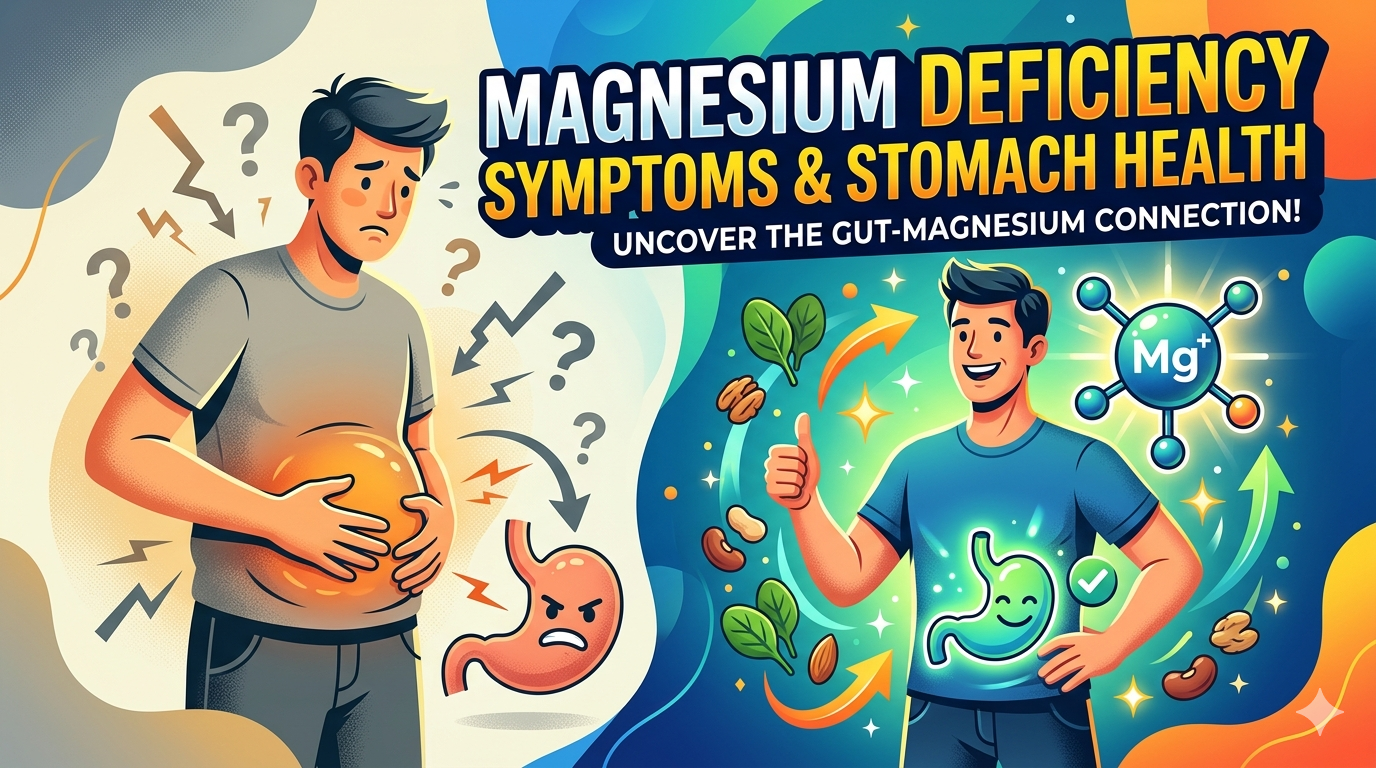
Magnesium deficiency affects your stomach, gut motility, nerve function, mood, and even your heart health. This guide covers everything you need to know-symptoms, foods, remedies, causes, and tips to maintain optimal magnesium levels naturally.
What is Magnesium and Why it’s Important

Magnesium is involved in over 300 biochemical reactions. It supports:
- Muscles and Nerves: Helps muscles relax and nerves communicate
- Bones: Works with calcium & vitamin D for strong bones
- Heart: Maintains normal rhythm
- Energy: Converts food into energy (ATP production)
- Digestive System: Supports enzymes and intestinal motility
Tip: Low magnesium can lead to muscle spasms, heart irregularities, digestive discomfort, and fatigue.
Internal Link:
Check Vitamin D Benefits, for synergy with magnesium.
External Link:
Harvard Health – Magnesium
12 Key Symptoms of Magnesium Deficiency

1. Muscle Cramps and Spasms
Low magnesium causes muscles to contract abnormally, leading to cramps, especially in legs and feet.
Note: Nighttime leg cramps are a common early warning.
Internal Link: How to Strengthen Immunity Naturally
External Link: Mayo Clinic – Muscle Spasms
2. Fatigue and Weakness
Without magnesium, your body cannot produce sufficient ATP, leading to constant tiredness.
Internal Link: Early Signs of Weak Immune System
External Link: NIH – Magnesium
3. Digestive Issues: Bloating, Constipation, Nausea
- Bloating: Slower digestion due to poor gut motility
- Constipation: Muscles in intestines relax less
- Nausea: Stomach enzyme activity impaired
Tip: Foods like spinach, almonds, and black beans can naturally improve digestion.
4. Mood Swings and Anxiety
Magnesium affects neurotransmitters. Low magnesium may lead to irritability, anxiety, and poor focus.
Internal Link: Vitamin D Immune System Benefits
External Link: Mayo Clinic – Magnesium & Mood
5. Heart Palpitations and Arrhythmia
Magnesium regulates heartbeat. Deficiency can cause palpitations and irregular rhythm.
External Link: American Heart Association – Magnesium
6. Sleep Disturbances
Magnesium supports melatonin and GABA, which improve sleep quality. Low magnesium = difficulty falling asleep.
External Link: NIH – Magnesium & Sleep
7. Migraines
Low magnesium may trigger chronic headaches and migraines.
External Link: Mayo Clinic – Magnesium for Migraines
8. Tingling and Numbness
Deficiency can affect peripheral nerves, causing tingling in hands and feet.
Internal Link: How to Strengthen Immunity Naturally
9. Loss of Appetite
Low magnesium reduces appetite, which can affect overall nutrition and energy levels.
Internal Link: Vitamin B12 Deficiency Symptoms
10. Bone Weakness
Magnesium helps calcium absorption. Deficiency = weak bones and fractures.
Internal Link: Vitamin D Benefits
11. Muscle Weakness & Tone Issues
Magnesium deficiency affects muscle tone and can reduce physical performance.
12. Stomach Discomfort & Indigestion
Slow enzyme activity causes bloating, cramping, and general digestive discomfort.
Best Magnesium-Rich Foods
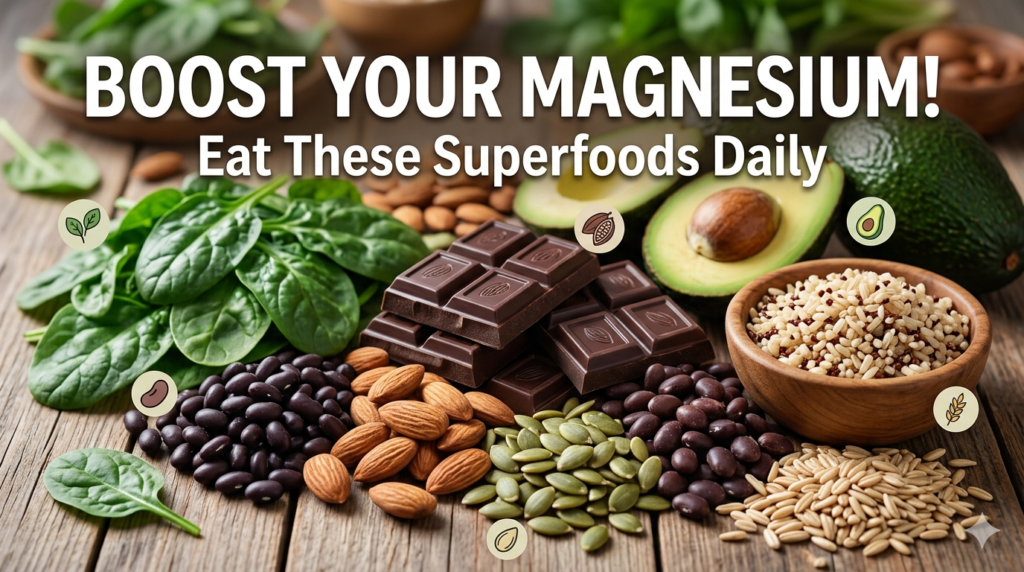
Eating magnesium-rich foods is the most natural and effective way to prevent or treat deficiency. Here’s a detailed list:
1️⃣ Dark Chocolate
- Benefits: 28 grams of dark chocolate contains around 60 mg magnesium.
- Extra: Also rich in antioxidants, fiber, and iron.
- Tip: Choose 70% cocoa or higher for maximum benefit.
Internal Link: Foods to Boost Immunity Naturally
External Link: Harvard Health – Dark Chocolate Benefits
2️⃣ Spinach
- Benefits: One cup of cooked spinach contains ~150 mg magnesium.
- Extra: High in iron, vitamin K, folate, and antioxidants.
- Tip: Lightly steam to retain nutrients.
Internal Link: Vitamin D Foods & Benefits
External Link: WebMD – Spinach Nutrition
3️⃣ Almonds
- Benefits: 28 grams contain ~80 mg magnesium.
- Extra: Good for heart health, cholesterol management, and energy.
External Link: Healthline – Almonds Nutrition
4️⃣ Pumpkin Seeds
- Benefits: 28 grams contain ~150 mg magnesium.
- Extra: Also high in zinc, protein, and antioxidants.
External Link: Medical News Today – Pumpkin Seeds
5️⃣ Black Beans
- Benefits: One cup cooked contains ~120 mg magnesium.
- Extra: High in fiber, protein, and antioxidants.
- Tip: Include in salads or soups for better absorption.
External Link: WebMD – Beans Nutrition
6️⃣ Avocado
- Benefits: One medium avocado contains ~58 mg magnesium.
- Extra: Healthy fats, fiber, potassium, and vitamins.
External Link: Healthline – Avocado Nutrition
7️⃣ Whole Grains (Brown Rice, Oats, Quinoa)
- Benefits: One cup cooked quinoa ~118 mg magnesium.
- Extra: Fiber-rich, supports digestion, and stabilizes blood sugar.
External Link: Harvard T.H. Chan – Whole Grains
Natural Remedies to Boost Magnesium

Beyond diet, these natural approaches help improve magnesium levels:
1️⃣ Magnesium Supplements
- Forms: Magnesium citrate, glycinate, oxide
- Best: Magnesium citrate or glycinate for better absorption
External Link: NIH – Magnesium Supplements
2️⃣ Epsom Salt Baths
- Magnesium absorbed through skin can relax muscles and reduce cramps
- Tip: Soak 15-20 minutes in warm water
External Link: Healthline – Epsom Salt Benefits
3️⃣ Reduce Sugar & Alcohol Intake
- High sugar or alcohol reduces magnesium absorption
- Tip: Limit processed foods and sweetened drinks
Internal Link: Healthy Lifestyle Tips
External Link: Harvard Health – Sugar Effects
4️⃣ Stress Management
- Chronic stress lowers magnesium
- Practices: Meditation, yoga, deep breathing
External Link: Mayo Clinic – Stress Management
Top Causes of Magnesium Deficiency
- Poor Diet: Low in vegetables, nuts, seeds
- High Sugar & Processed Foods: Reduce absorption
- Stress: Leads to magnesium loss via urine
- Medications: Diuretics, antibiotics, acid blockers
- Digestive Disorders: IBS, Crohn’s, chronic diarrhea
Tip: Regular magnesium blood tests can help track levels and prevent deficiency.
External Link: NIH – Magnesium Overview
When to Consult a Doctor
Seek medical advice if you experience:
- Persistent fatigue or muscle cramps
- Severe digestive issues
- Heart palpitations or arrhythmia
- Tingling or numbness in hands/feet
Doctors can perform blood tests and recommend supplements or dietary adjustments.
FAQs
Q1: How much magnesium do I need daily?
Adults: 310-420 mg depending on age & gender
Q2: Can magnesium help with constipation?
Yes, it relaxes intestinal muscles and draws water into stool.
Q3: Is magnesium safe for everyone?
Generally yes, but consult a doctor if you have kidney disease.
Q4: Can magnesium improve sleep?
Yes, it helps regulate melatonin and GABA for better sleep quality.
Q5: Which foods are highest in magnesium?
Spinach, almonds, pumpkin seeds, black beans, dark chocolate.
Conclusion
Magnesium is essential for muscles, nerves, heart, bones, and digestion. Deficiency can lead to muscle cramps, fatigue, digestive problems, mood swings, and heart issues.
Pro Tip: Maintain a diet rich in spinach, almonds, pumpkin seeds, black beans, and dark chocolate. Manage stress, reduce sugar, and consider magnesium supplements if needed.
Internal and external links help you explore further and apply remedies effectively. Early action prevents chronic issues and promotes overall health.
External Link: Harvard Health – Magnesium
1 thought on “Magnesium Deficiency Symptoms and Stomach Health”